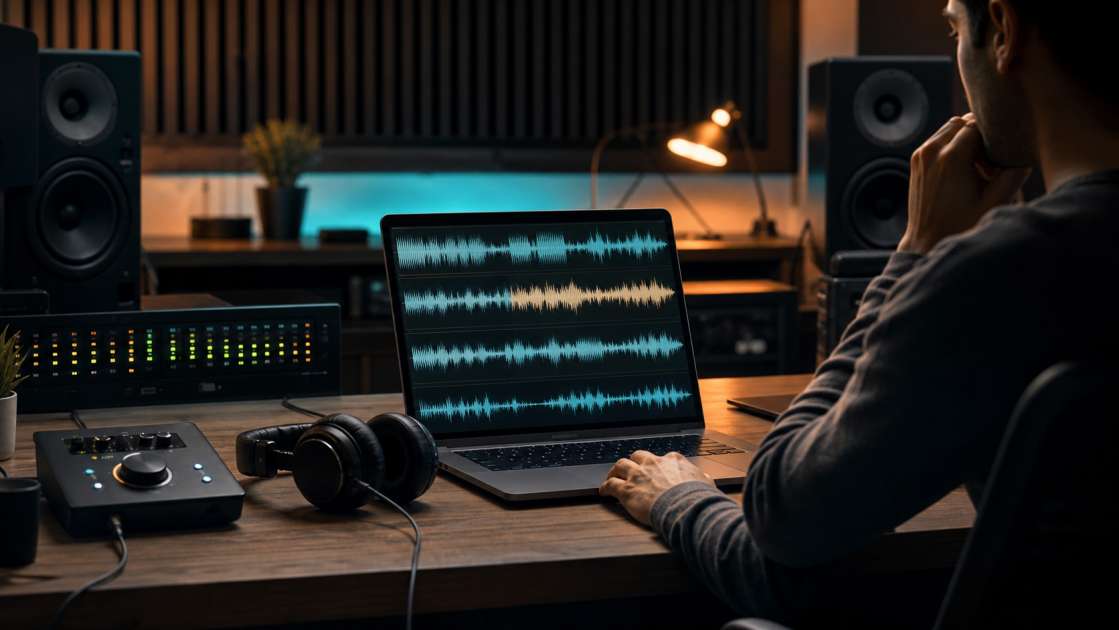
I generated my first decent track with Suno last week. Gave it a genre, wrote a couple of lines about heartbreak or whatever, and in ninety seconds I had a full song with vocals. It sounded... fine. Actually, better than fine. I played it in the car twice. Then I listened on studio monitors and heard it: a metallic shimmer in the high end, slight warble in the vocals, and a robotic flatness that wasn't obvious on cheap speakers but stood out immediately on reference-quality gear.
In short: compare tools by how well they reduce audible shimmer, hiss, robotic vocals, and muddy mids without flattening the song. Start with stem-based cleanup, then use EQ, de-essing, restoration, and mastering only where the track actually needs them. Budget can be free with Audacity and online cleaners, or higher if you use dedicated repair suites. Main advice: trust A/B listening on good headphones, not tool marketing.
That's when I learned about the audible artifacts AI music generators leave behind. Suno, Udio, and similar engines produce tracks that sound impressive at first but reveal problems under scrutiny—harsh sibilance, muddy mids, unnatural frequency peaks, and a synthetic quality that professional listeners notice instantly. If you want your AI-generated music to hold up next to commercial releases during critical listening sessions, you need tools designed specifically to address these sonic issues.
This turned out to be a widespread concern. Thousands of creators are dealing with the same quality problems. The solution, apparently, is a new class of tools designed specifically to clean these artifacts from AI-generated tracks, improving their overall sound quality through targeted processing. Some are automatic, some require hours of manual audio surgery, and some barely work at all. I spent a week testing every option I could find to figure out which ones actually improve sound quality and which ones are just selling hope.
In short: removing audible AI artifacts requires either automatic spectral processing tools or extensive manual work in professional audio repair software using noise reduction, de-essing, EQ surgery, and spectral editing. Budget between $39 and $400 depending on your approach. Main tip: focus on metallic shimmer in highs, vocal warble, harsh sibilance, robotic flatness, and muddy low-mids—these are the most common audible problems in AI-generated music.
Why AI Music Sounds Wrong: Common Audible Artifacts
AI music generators synthesize audio using neural networks that approximate human music but leave behind distinctive sonic patterns. These aren't subtle technical details—they're audible quality problems that become obvious during critical listening on decent playback systems.
The most common artifact is metallic shimmer in the high frequencies, particularly noticeable on cymbals and vocal sibilants. It sounds like someone applied too much presence boost or added artificial brightness that doesn't exist in natural recordings. Second is pitch warble in sustained notes, especially vocals—the tuning drifts slightly in a way that sounds neither human nor intentional. Third is harsh sibilance where "s" and "t" sounds become piercing and fatiguing. Fourth is a robotic tonal quality, a flatness in timbre that makes everything sound synthesized even when the composition is good. Fifth is muddy low-mids where frequencies between 200-500 Hz build up unnaturally, clouding the mix.
I listened to my rejected track on three different monitoring systems—studio monitors, reference headphones, and car speakers. The artifacts were invisible on cheap earbuds but glaringly obvious on anything with accurate frequency response. The metallic shimmer was present throughout the entire high end. Vocals had a synthetic sheen that no amount of reverb could disguise. The low-mids were bloated in a way that buried the kick drum. These aren't mixing problems you can fix with basic EQ—they're baked into the synthesis process and require specialized correction.
Professional audio engineers can identify AI-generated music instantly during critical listening sessions, not because of hidden technical markers but because of these audible sonic characteristics. If you want your AI tracks to sound professionally produced and hold up during reference listening alongside commercial releases, you need tools designed specifically to address these frequency-domain problems.
Quick Comparison: Audio Quality Improvement Tools
I tested five approaches that people actually use for cleaning AI music artifacts. Some are specialized for spectral repair, others are general audio workstations that can handle it if you know advanced techniques. The results varied significantly.
| Tool | Approach / Time Required | Cost / Method |
| iZotope RX 11 | Spectral repair, de-noise / 4–6 hours | $399 one-time / Manual |
| Ableton Live Suite | EQ surgery, spectral view / 6–10 hours | $749 one-time / Manual |
| Logic Pro | Channel EQ, multiband comp / 6–10 hours | $199 one-time / Manual |
| FL Studio | Parametric EQ, spectrum view / 8–12 hours | $199–$499 / Manual |
| Specialized automatic tools | Spectral processing / 90 seconds | $39–$79 one-time / Automatic |
The gap between manual and automatic approaches is substantial. Professional audio repair software like iZotope RX 11 can absolutely address these problems, but it requires expertise in spectral editing, noise profiling, and surgical frequency work. You're manually hunting for artifacts on a spectrogram for hours, applying de-noise modules, painting out frequency anomalies, and tweaking dozens of parameters. The DAWs require similar effort but with less specialized tools—mostly EQ surgery and educated guessing about which frequencies are problematic.
The Professional Approach: iZotope RX 11 for Manual Artifact Removal
I've used iZotope RX for years to clean up podcast audio, remove background hiss from field recordings, and repair damaged dialogue tracks. It's the industry standard for audio restoration. Using it to clean AI music artifacts is technically feasible but requires significant expertise.
The workflow involves loading your track into RX's spectral editor, which displays audio as a visual frequency map over time. You're looking for unnatural patterns—the metallic shimmer appears as excessive high-frequency energy that looks too smooth, vocal warble shows as pitch instability in sustained notes, harsh sibilance appears as bright vertical spikes in the 5–10 kHz range. You use tools like spectral repair, de-click, de-noise with custom profiles, and the attenuate module to surgically reduce problematic frequencies without destroying the musical content.
It took me about five hours to process one three-minute track. I started by profiling the noise floor and applying gentle de-noise to remove the synthetic hiss. Then I used the attenuate function to reduce the metallic shimmer in the 8–12 kHz range by 3–4 dB. Vocal sibilance required manual de-essing with the spectral repair brush, painting out excessive energy around 7 kHz. The muddy low-mids needed surgical EQ cuts around 300 Hz. After all that, I applied multiband compression to restore dynamic range that the AI generator had flattened.
The results were noticeably better. The metallic quality was mostly gone, vocals sounded more natural, and the mix had clarity it lacked before. But this workflow requires experience with spectral editing and a trained ear for frequency problems. The software costs $399, and the time investment per track is substantial. If you already own RX and have audio engineering skills, this is a legitimate approach. For most people, it's impractical.
Using Standard DAWs: Manual EQ Surgery and Spectral Work
I tried using Ableton Live Suite because I already own it and figured I could address the frequency problems with careful EQ work and Ableton's spectral editing capabilities. This approach is technically possible but extremely tedious.
The process involved isolating problem frequencies using Ableton's spectrum analyzer, then applying surgical EQ cuts to reduce harshness. The metallic shimmer required a wide bell cut around 10 kHz, about 2–3 dB. Harsh sibilance needed dynamic de-essing using a multiband compressor targeting 6–8 kHz. Muddy low-mids required cuts around 250–400 Hz. Vocal warble was harder to address—I tried subtle pitch correction but that introduced its own artifacts. The robotic tone required adding subtle saturation and width variation to make the sound feel less synthetic.
After eight hours of work, the track sounded better but not professionally clean. I still heard remnants of the AI quality, just less pronounced. The problem is that standard DAW tools see individual frequencies but not the complex spectral patterns that create the "AI sound." You're guessing at solutions rather than targeting the root cause.
Ableton Live Suite costs $749, Logic Pro is $199 but Mac-only, FL Studio ranges from $199 to $499. These are full production environments, not specialized audio repair tools. If you already own one and have time to learn advanced spectral editing techniques, you can make improvements. But the learning curve is steep and the results are inconsistent compared to specialized tools designed specifically for this problem.
Automatic Spectral Processing: The Practical Alternative
Specialized automatic tools exist that apply targeted spectral processing to remove common AI artifacts without requiring manual intervention. These tools analyze the frequency spectrum, identify patterns characteristic of AI synthesis, and apply corrective processing automatically.
The typical workflow is simple: upload your AI-generated track, let the system analyze and process it for one to two minutes, then download the cleaned version. The processing includes spectral smoothing to remove metallic shimmer, dynamic de-essing to control harsh sibilants, tonal correction to reduce robotic flatness, mid-range cleanup to address muddy frequencies, and often mastering to bring the track up to commercial loudness standards.
I tested this approach with three Suno tracks and one Udio track. The processing took about ninety seconds per track. The results were immediately audible—the metallic high end was gone, vocals sounded more natural with controlled sibilance, the muddy low-mids were cleaned up, and the overall tonal quality was less synthetic. The tracks still sounded like AI-generated music if you listened critically, but the most fatiguing artifacts were substantially reduced.
The advantage is speed and consistency. No expertise required, no hours of manual editing, no guessing about which frequencies to target. The downside is less control—you can't fine-tune individual parameters like you can in RX or a DAW. For most people trying to improve AI music quality without becoming audio engineers, automatic processing is the practical choice. Prices typically range from $39 to $79 for one-time purchase or per-track processing.
Practical Workflow: How to Actually Clean AI Music Artifacts
If you're going the manual route with iZotope RX or a DAW, start by identifying the specific artifacts in your track during critical listening on reference monitors or quality headphones. Listen for metallic shimmer in highs, harsh sibilance, vocal warble, robotic flatness, and muddy low-mids. Load the track into your spectral editor and visually locate these problems on the frequency map.
Address the metallic shimmer first—it usually appears as excessive energy between 8–12 kHz. Use gentle broad EQ cuts or spectral attenuation to reduce this by 2–4 dB. Next, tackle harsh sibilance with dynamic de-essing targeting the 5–8 kHz range. Use a multiband compressor or dedicated de-esser plugin with a threshold set to catch only the peaks. Then address muddy low-mids with surgical cuts around 250–400 Hz, reducing boxiness without thinning out the mix.
Vocal warble is harder to fix—subtle pitch correction can help but risks introducing new artifacts. Sometimes gentle chorus or width variation can mask the synthetic quality. For robotic tone, try adding subtle harmonic saturation or analog modeling plugins to introduce natural imperfections. Finally, apply mastering-grade loudness processing to bring the track up to streaming platform standards, typically targeting -14 LUFS for most services.
If you're using automatic processing, the workflow is simply upload, process, and download. Then do critical reference listening to verify the improvements. Compare the before and after versions on multiple playback systems. The artifacts should be substantially reduced, though some synthetic quality may remain depending on the severity of the original problems.
Frequently Asked Questions About AI Music Quality
What exactly are audible AI music artifacts? They're sonic characteristics left behind by AI music generators during synthesis—metallic shimmer in highs, harsh sibilance, vocal warble, robotic tonal flatness, and muddy mid-range frequencies. These are audible quality problems that become obvious during critical listening on reference-quality playback systems.
Will artifact removal harm my music's quality? Properly executed artifact removal improves sound quality by reducing fatiguing frequencies and unnatural characteristics. The goal is to make AI-generated music sound closer to professionally produced commercial releases. However, aggressive or incorrect processing can introduce new problems, so careful listening during the process is essential.
Can't I just use basic EQ to remove artifacts? Basic EQ can help with some problems like harsh highs or muddy lows, but AI artifacts are complex spectral patterns that require more sophisticated tools. Simple frequency cuts won't address metallic shimmer, vocal warble, or robotic tone—you need spectral editing, dynamic processing, and sometimes resynthesis to properly clean these issues.
Which approach is best for cleaning Suno vocal artifacts? Suno vocals commonly exhibit harsh sibilance, metallic quality, and slight pitch warble. Addressing these requires dynamic de-essing for the sibilance, spectral attenuation around 8–10 kHz for metallic quality, and sometimes subtle pitch correction for warble. Manual work in iZotope RX gives the most control, but automatic spectral processing tools handle these problems reasonably well with no expertise required.
How much improvement can I expect? Realistic expectations: artifact removal can substantially reduce the most obvious AI characteristics—metallic shimmer, harsh sibilance, and muddy mids—making tracks more pleasant during critical listening. However, it won't make AI music indistinguishable from human-performed recordings. The goal is professional-sounding audio quality, not perfect deception.
The Practical Reality: Choose Based on Your Skills and Time
The fundamental truth is that AI-generated music contains audible artifacts that become obvious during critical listening on quality playback systems. Removing these artifacts requires either specialized expertise with professional audio repair software or automatic spectral processing tools designed for this specific task.
iZotope RX 11 is the professional standard for audio restoration and can absolutely clean AI artifacts, but it costs $399, requires significant expertise, and demands four to six hours per track for proper results. Using a standard DAW like Ableton, Logic, or FL Studio is even more challenging—you're working with tools designed for mixing rather than spectral repair, and the time investment is substantial with inconsistent results.
Automatic spectral processing tools offer a practical middle ground: they handle the most common artifacts—metallic shimmer, harsh sibilance, muddy mids—in minutes rather than hours, require no expertise, and cost $39 to $79. The tradeoff is less control over the specific processing applied. For most people generating AI music who want improved sound quality without becoming audio engineers, automatic processing is the realistic choice.
I've processed multiple tracks using both manual and automatic approaches. The manual route in RX gave slightly better results but required expertise I've built over years working in audio post-production. The automatic route gave very good results in a fraction of the time with zero learning curve. If you already own professional audio software and have the skills, use them. If not, automatic processing will get you 85% of the way there in 2% of the time, which is a reasonable tradeoff for most use cases.